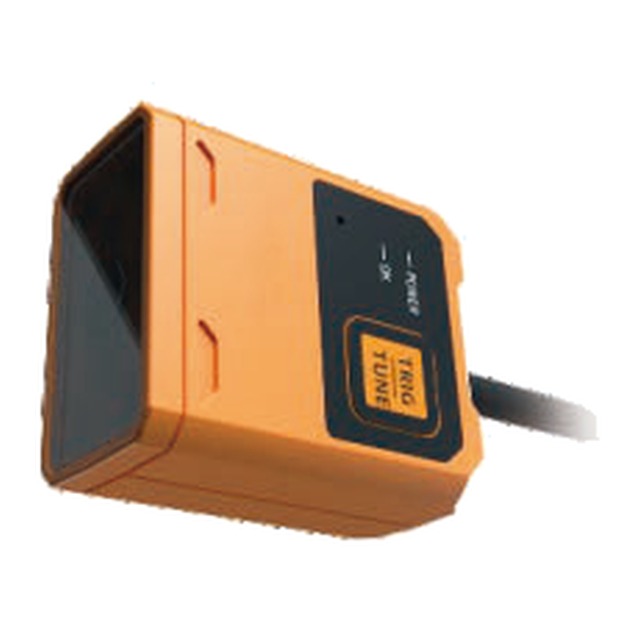
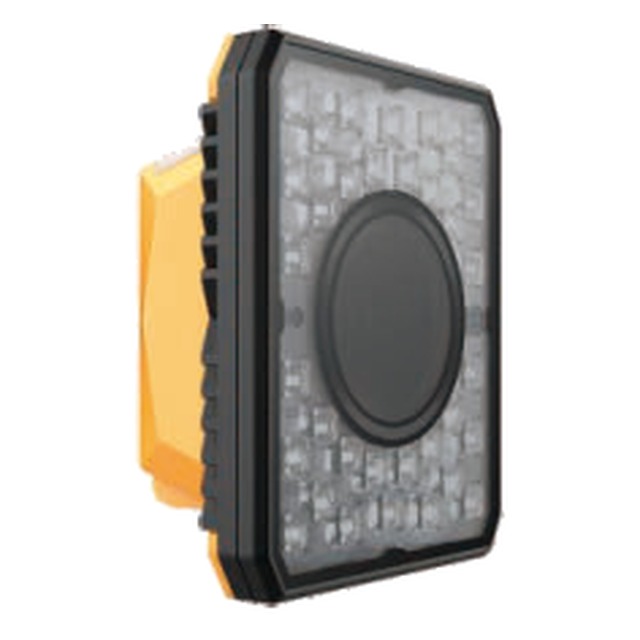
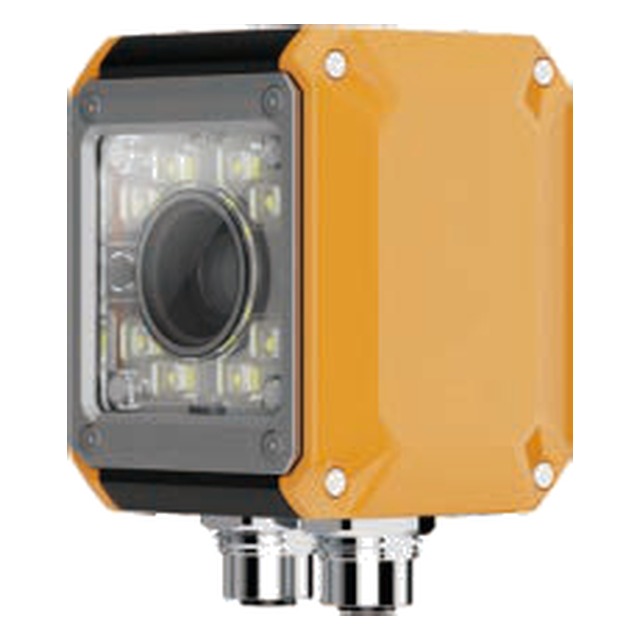
In-machine inspection at short range
The 6 mm lens fills the frame with the part from a working distance that fits inside the guards.

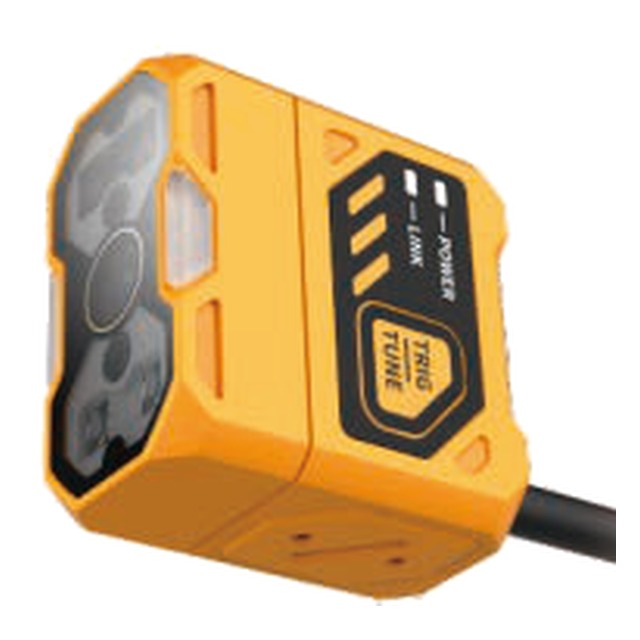
1 MP (1280 × 800) at 6 or 12 mm in an IP67 body, with a manual focus ring on three part numbers and a liquid lens on the rest, all on the same 24 V DC / 15 W
Model LE800P-100-000 / 001 / 002 · LE800P-100-003 / 030 (031) / 032 (033) · LE800P-103-030 (031) / 032 (033) · Brand LE Raun · Category: Smart Code Readers
The LE800P closes the gap between the compact LE600P and the 5 MP LE2000P: a 1 MP sensor at 1280 × 800 with a 3 µm pixel on a 1/1.8" target, in an IP67 body, at 6 or 12 mm focal length. It is the body to choose when the working distance is short, the environment is wet, and 5 MP is more resolution than the inspection needs.Eight part numbers split two ways. The 100 prefix is the 6 mm family; the 103 prefix is 12 mm. Within the 6 mm family, the -000, -001 and -002 bodies have a manual focus ring and the -003, -030 and -032 bodies use a liquid lens; the 12 mm family is liquid focus only. The bracketed suffixes — 030 (031), 032 (033) — are variant codes within the same optics.Optics aside, everything is common: a global shutter, a 2.74 µs minimum exposure, 24 V DC at 15 W, 0 to +45 °C and IP67. That commonality is deliberate — a fixture designed around one LE800P body accepts any other without a new bracket or a new cable.
The 6 mm lens fills the frame with the part from a working distance that fits inside the guards.
A liquid-focus part number covers two part heights from one mounting position, instead of two sensors.
Checks that a gasket or a seal is seated in its groove before the next station closes the assembly.
Confirms which way a part is facing so the robot picks it by the correct end.
The IP67 body survives the cleaning cycle that follows a filling or packaging operation.
| Focal length | 6 mm (100-000 / 001 / 002 and 100-003 / 030 / 032) · 12 mm (103-030 / 032) |
|---|---|
| Resolution | 1 MP (1280 × 800) |
| Focus adjustment | Manual focus (100-000 / 001 / 002) · liquid focus (100-003, 100-030, 100-032, 103-030, 103-032) |
| Shutter | Global |
| Exposure time | 2.74 µs minimum — the catalogue prints the range as 2.74 μm – 2.74 μm |
| Pixel size | 3 µm × 3 µm |
| Sensor target size | 1/1.8" |
| Power input | 24 V DC |
| Power consumption | 15 W |
| Operating temperature | 0 to +45 °C |
| Protection level | IP67 |
| Frame rate | up to 60 fps |
| Code types | 1D barcodes, 2D codes (Data Matrix, QR, PDF417) and direct-part marking (DPM) |
| Minimum module | 0.1 mm (3 mil) at the rated working distance |
| Lighting | Built-in white, red or blue LED; polarised option for shiny parts |
| Interface | Ethernet TCP/IP, RS232, RS485, digital I/O, trigger input |
| Item | Value |
|---|---|
| Body length | 128 mm including the liquid-focus lens |
| Depth without the lens | 33.6 mm |
| Mounting | 2 × M3, 5 mm deep, on the base; 2 × M3, 5 mm deep, on the side |
The liquid-focus lens changes shape with the drive voltage, so leave the 40–300 mm working range clear of the guard: the front element moves forward of the 128 mm body length at close focus.
| Connection | Function |
|---|---|
| M12 8-pin, pin 2 | Trigger input (PNP, 5–24 V) |
| M12 8-pin, pin 4 / 5 | Result outputs — good read / no read |
| M12 8-pin, pin 6 / 7 | RS232 TX / RX |
| M12 4-pin D-code | Ethernet 100 Mbit/s |
| — | Earth stud on the housing |
Measure the module size (the width of the narrowest bar) and the field of view you need. A 0.1 mm module needs roughly 3 pixels per module, which sets the resolution and the working distance.
FOV = sensor width × working distance ÷ focal length. A 5 MP sensor with a 16 mm lens at 300 mm covers about 190 × 120 mm — enough for a label with margin.
Printed labels read with white light; laser-marked or dot-peened DPM codes need low-angle red or blue light and a reader with a DPM algorithm. Ordering a label reader for a DPM code is the most common mistake in a traceability project.
Ethernet for a PC, an MES or a PLC with a socket; RS232 for a legacy terminal; digital I/O when the reader only has to say good / no-read to a relay.
The 6 mm focal length gives the widest field of view in the range at a short working distance, which is what an in-machine inspection needs when there is no room to stand back.
The liquid-focus part numbers share the body and the mounting with the manual ones, so a fixture can move from a fixed focus to a switchable one without a redesign.
1280 × 800 on a 1/1.8" target — the same sensor geometry as the 5 MP LE2000P, at a pixel count that keeps the data rate and the processing load low.
Sealed for washdown and powered from the same rail as the rest of the cabinet, with no separate controller.
Manual if the working distance is set once and never changes: the -000, -001 and -002 bodies are simpler and there is nothing to drive. Liquid if the part height varies within the cycle or the focus has to be changed by the controller without opening the machine.
The brochure lists the focus type but not a drive unit, so treat the focus element as part of the sensor and confirm the control interface with the factory. Plan the cabinet space for whatever drives it before the mechanical design is frozen.
The brochure writes them as "LE800P-100-030 (031)", a base part number with a bracketed variant, and gives no separate specification for either. The optics, resolution and housing are identical; the difference is in the variant code, which the factory has to confirm.
Send your application details or the guard opening dimensions and we will specify the right model and configuration for your machine.