Pallet and fixture presence on a transfer line
M18 flush sensors in the rail confirm the pallet is seated before the clamp closes.

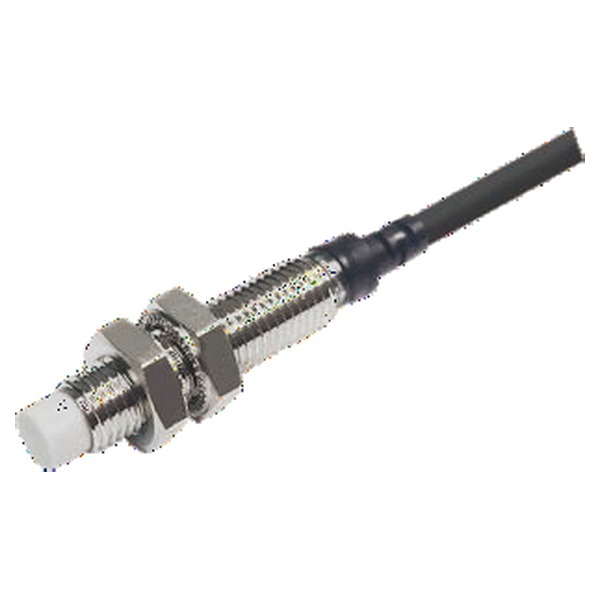
The general-purpose block: eight body sizes from M8 to M30, sensing 1 mm to 25 mm, with a red / green status LED you can read from across the cell.
Model LJ8C / LJ8M / LJ12C / LJ12M / LJ18C / LJ18M / LJ30C / LJ30M · Brand LE Raun · Category: Proximity Sensors
This is the family most machines end up using. The suffix tells you what you need to know: M is flush (shielded) and sits level with the mounting surface, C is non-flush and needs a clearance ring of free space around the face, which buys 50 – 100 % more sensing distance in the same body.Sensing distance runs 1 – 2 mm on M8, 2 – 8 mm on M12, 8 – 12 mm on M18 and 10 – 25 mm on M30. Switching frequency falls as the body grows — 2 kHz on the small flush bodies, 100 Hz on the M30 25 mm version — so a long-range sensor is not the right choice for a fast cam.All versions are 10 – 30 V DC, 3-wire, with NPN or PNP and NO or NC selected by suffix, and a 2 m cable. The C bodies are supplied with a cable gland; the M bodies are potted.
M18 flush sensors in the rail confirm the pallet is seated before the clamp closes.
The 2 kHz M12 body counts keyways on a spinning shaft where a 500 Hz sensor would skip teeth.
M30 non-flush bodies sense the raised gate from 25 mm so the sensor sits behind the frame, out of the product path.
The LED is visible through a window in the guard, so a die-setter can confirm the cushion returned without opening the door.
M12 sensors in the side channel detect the zone full / empty state for the release logic.
| Series | LJ8C · LJ8M · LJ12C · LJ12M · LJ18C · LJ18M · LJ30C · LJ30M |
|---|---|
| Body sizes | M8×45 / M8×50 · M12×62 / M12×71 · M18×70 / M18×78 · M30×71 / M30×83 mm |
| Sensing distance | 1 – 25 mm (M8: 1–4 · M12: 2–8 · M18: 8–12 · M30: 10–25) |
| Suffix C / M | C = non-flush (longer range) · M = flush mount |
| Housing / face | Nickel-plated copper barrel, PBT sensing face |
| Operating voltage | 10 – 30 V DC |
| Switching frequency | 2 kHz down to 100 Hz as the body and range grow |
| Repeat accuracy | < 3.0 % (Sr) |
| Indicator | Dual-colour LED: output state and power |
| Output | NPN / PNP, NO / NC — N, N2, P, P2 suffix |
| Cable | 2 m, 3-wire; cable gland version on the C bodies |
| Protection | IP67 |
| Current consumption | ≤10 mA |
| Output current | ≤200 mA |
| Voltage drop | ≤1.5 V |
| Hysteresis | ≤0.05 mm of the sensing distance |
| Circuit protection | Short-circuit, overload, reverse polarity |
| Item | Value |
|---|---|
| Thread | M12 × 1 · M30 × 1.5 |
| Cable | Ø4.0 mm 3-core on M12 · Ø5.0 mm on M30 |
| Mounting | Two nuts on the thread, or a clamp bracket on the 62 / 71 mm bodies |
| Lead | Colour |
|---|---|
| 2 | Blue |
| 3 | Black |
| — | Two-wire types |
A shielded (flush) sensor can be embedded in metal with only its face exposed, at about 60 % of the unshielded range. An unshielded sensor needs a free zone around the barrel but reaches further.
Order at least 1.5 × the nominal distance to allow for tolerances, temperature and target material. Non-ferrous targets — brass, aluminium, copper, stainless — reduce the distance to roughly 30–50 %.
The target should be at least as large as the sensing face. A smaller target reduces the distance proportionally, so a 4 mm target on an M18 sensor will not switch at 5 mm.
NPN / PNP, NO / NC, 3-wire or 2-wire. Plastic barrel for general use, stainless for weld fields, PTFE-faced for weld spatter, high-temperature types up to 120 °C.
A red / green LED on the barrel shows output and power. On a cell with twenty sensors, that is the difference between a five-minute check and a shift.
The M and C suffixes share a body, so a machine can use a flush 8 mm sensor in one station and a non-flush 12 mm one in the next without a new bracket.
The barrel takes clamp screws and coolant without the thread flattening, and the PBT face does not crack when a part hits it.
M8 up to 4 mm, M12 up to 8 mm, M18 up to 12 mm, M30 up to 25 mm — pick the smallest body that reaches, not the biggest that fits.
Flush if the sensor must sit level with a metal surface or inside a bore. Non-flush if you need the extra range and can leave a clear ring of at least one face diameter around the sensing face.
Yes, but at 8 mm the field is wide and a nearby bracket can trip it. If the target is small, drop to the 4 mm version and move the sensor closer.
Output energised / de-energised, plus power. It is a status indicator, not a distance readout — for that you need the analogue or laser displacement types.
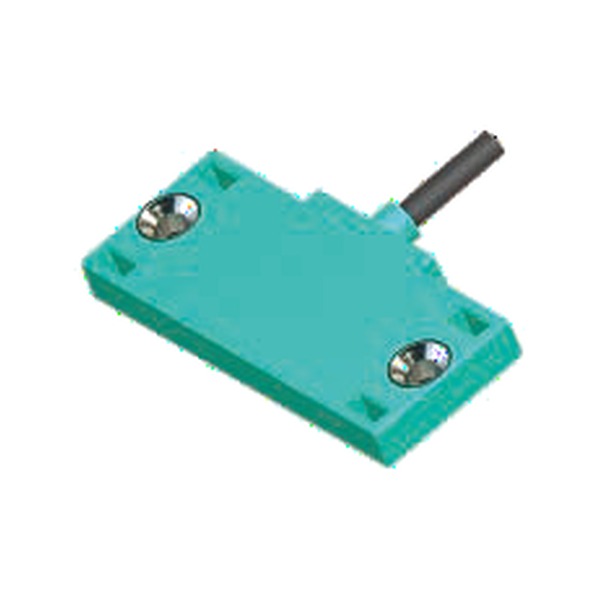 Ultra-Thin Flat Inductive Proximity Sensors (5 – 10 mm thick)Proximity Sensors
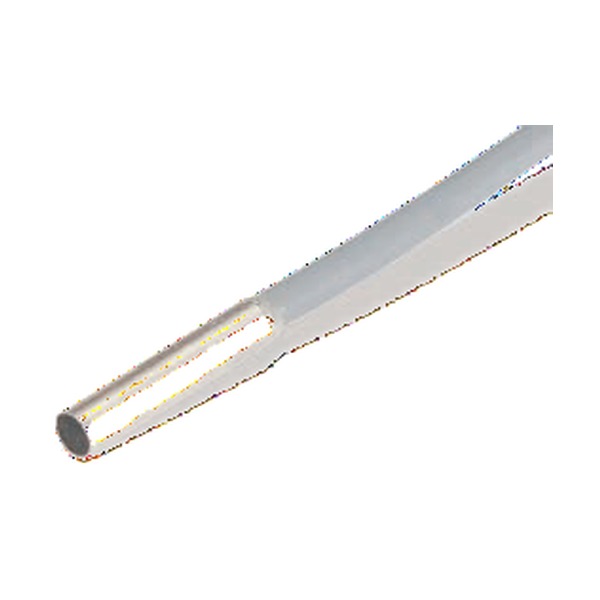 Ultra-Short Inductive Proximity Sensors (15 – 28 mm body)Proximity Sensors
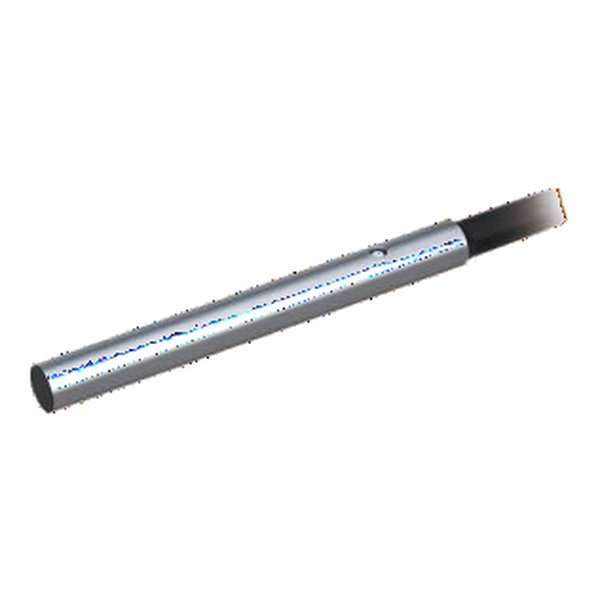 Ultra-Compact Inductive Proximity Sensors (φ3 to M6)Proximity Sensors
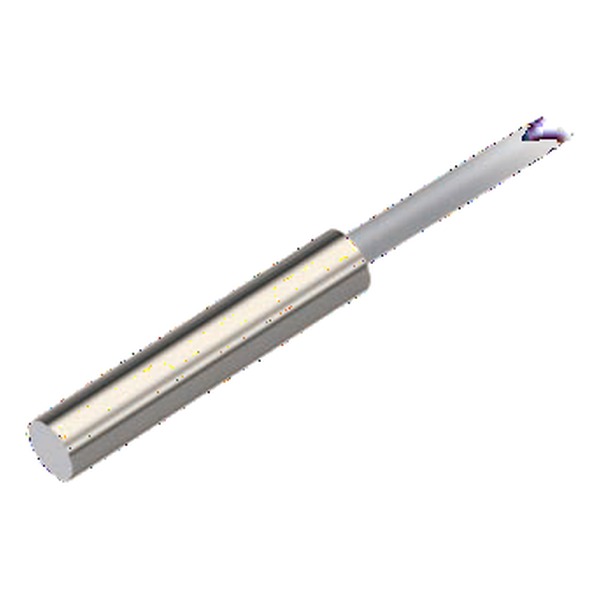 Standard Inductive Proximity Sensors, Short Barrel (M6.5 – M30)Proximity Sensors
Send your application details or the guard opening dimensions and we will specify the right model and configuration for your machine.